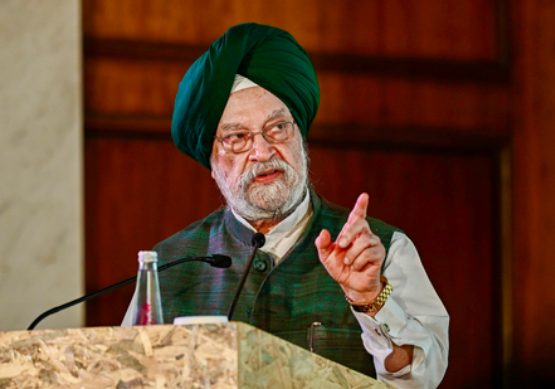
NEW DELHI–India has not faced pressure from the United States to reduce its imports of Russian crude oil, Petroleum and Natural Gas Minister Hardeep Singh Puri said Tuesday, emphasizing that the country’s energy purchasing decisions are driven primarily by pricing and national economic interests.
Speaking at an event, Puri said India continues to evaluate international crude oil supplies based on commercial considerations, including discounts offered by competing producers.
“I never felt anything,” Puri said when asked about pressure from Washington to reduce Russian oil purchases.
The minister’s remarks come as India adjusts its crude oil sourcing strategy, with refiners increasing purchases from Middle Eastern suppliers while reducing imports from Russia.
Puri noted that Russian crude accounted for just 0.2% of India’s total oil imports before the outbreak of the Ukraine war in 2022.
However, purchases increased significantly after the conflict began, as discounted Russian crude became an attractive option for Indian refiners seeking to manage energy costs.
The minister said purchasing decisions continue to depend on the price competitiveness of Russian oil compared with other available grades.
He explained that Indian refiners have recently reduced Russian oil purchases as crude from Gulf producers has become available at competitive discounts.
Puri also pointed to improving supply conditions in the Middle East, where producers have been able to increase crude shipments.
India’s imports of Middle Eastern oil surged in September, returning to levels seen before the Ukraine war, according to ship-tracking data.
At the same time, Indian refiners reduced purchases of Russian crude amid increased competition from Chinese buyers and more attractive pricing from Gulf suppliers.
The minister emphasized that national economic interests remain central to India’s energy procurement decisions.
His comments come against the backdrop of ongoing geopolitical tensions surrounding Russian energy exports and international efforts to restrict Moscow’s oil revenues.
Earlier in October, U.S. President Donald Trump invoked national interest provisions to waive additional sanctions, restrictions and duties on Russian energy exports under legislation enacted in September.
The decision provided relief to India from the possibility of tariffs reaching as high as 100% on certain transactions involving Russian energy.
India, one of the world’s largest crude oil importers, has sought to maintain access to multiple international suppliers while protecting its economy from disruptions in global energy markets.
In September, Puri said India had successfully navigated supply-chain disruptions caused by geopolitical conflicts while maintaining stable energy imports.
He credited the government’s energy diplomacy under Prime Minister Narendra Modi with helping the country manage changing international market conditions.
“Energy security today is not simply about securing supplies; it is also about navigating conflicts, chokepoints, volatile prices and sudden disruptions while keeping the country and its economy on the move,” Puri said at the time.
The minister has also highlighted India’s expanding role in global energy markets, noting that the country is expected to account for nearly one-fourth of worldwide growth in energy demand over the next two decades.
That projected increase underscores the importance of maintaining diversified oil supplies and competitive purchasing arrangements as India’s energy requirements continue to expand.
Puri’s latest comments indicate that India’s shift toward greater purchases of Middle Eastern crude reflects changing market economics rather than direct pressure from Washington, with the government maintaining that pricing and national interests will continue to guide its oil import strategy. (Source: IANS)