
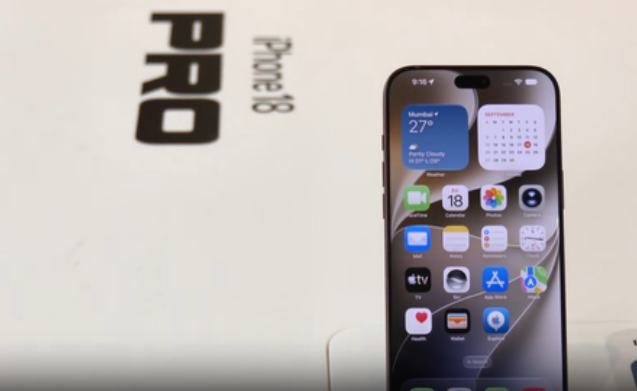
NEW DELHI–Apple’s iPhone 18 Pro series recorded a 3.1% increase in global sales during the first three weeks following its September launch, supported by strong demand in China even as sales declined in the United States and Japan, according to a report released Tuesday by Counterpoint Research.
The market research firm said combined sales of the iPhone 18 Pro and iPhone 18 Pro Max increased 3.1% compared with the performance of the iPhone 17 Pro series during the corresponding launch period last year.
The growth was attributed partly to improved product availability during the initial weeks of sales and higher prices for competing flagship smartphones from Chinese Android manufacturers.
However, the report highlighted significant regional differences in consumer demand, with China’s strong performance offsetting weaker sales in other major markets.
Sales of the iPhone 18 Pro series in China surged 29% year-over-year, making the country a major contributor to Apple’s global sales growth.
The increase reflected stronger demand in the Chinese market, although analysts cautioned that it remains unclear whether the momentum will continue beyond the initial launch period.
In contrast, sales declined in the United States and Japan, where higher prices discouraged some consumers from upgrading their devices.
Counterpoint Research said American consumers generally did not perceive the latest iPhone Pro models as offering substantial improvements in features or design compared with their predecessors.
This perception contributed to weaker replacement demand in the U.S. market, where consumers have increasingly been keeping their smartphones for longer periods.
In Japan, unfavorable currency exchange rates amplified the impact of higher prices, making the new devices more expensive for local buyers and contributing to softer demand.
The report also identified changing purchasing preferences within Apple’s premium smartphone lineup.
The iPhone 18 Pro Max accounted for 56% of total iPhone 18 Pro series sales during the first three weeks, compared with 57% for the previous generation during the same period last year.
The modest decline in the Pro Max’s share was attributed to higher pricing and stronger demand growth in emerging markets, including India and Southeast Asia.
Consumers in those markets showed a greater preference for the standard iPhone 18 Pro model over the larger and more expensive Pro Max.
The shift suggests that pricing continues to play an important role in purchasing decisions, even among customers shopping for premium smartphones.
“Whether China’s outperformance reflects durable demand or front-loaded buying will become clearer in the coming weeks,” said Sujeong Lim, associate director at Counterpoint Research.
Lim said the recovery of sales volumes in the United States and Japan would be important in determining the series’ performance over the coming months.
The upcoming launch of Apple’s iPhone Duo, scheduled for the 43rd week of the year, was also identified as a potential factor influencing near-term demand.
According to the report, preorders for the iPhone Duo remained strong, with demand currently exceeding available supply.
Counterpoint Research Director Tarun Pathak said sales of the iPhone 18 Pro series had varied considerably across geographic markets and that the firm would continue monitoring demand as the initial launch period gives way to more typical purchasing patterns.
He identified longer smartphone replacement cycles, memory-related price increases and broader macroeconomic uncertainty as factors affecting consumers’ willingness to upgrade.
These challenges have created a more competitive environment for premium smartphone manufacturers seeking to persuade existing customers to purchase newer devices.
Nevertheless, Pathak said Apple could continue benefiting financially even if overall unit sales growth remains relatively modest.
A greater share of higher-end smartphones in Apple’s sales mix, along with incremental improvements to the Pro lineup, could support revenue despite low single-digit growth in device shipments.
The latest findings indicate that Apple’s premium smartphone business continues to benefit from demand in China and emerging Asian markets, although pricing pressures and slower replacement cycles remain challenges in established markets such as the United States and Japan. (Source: IANS)