
WASHINGTON– The United States is moving to build a new economic security framework aimed at safeguarding artificial intelligence supply chains, with senior officials positioning the Pax Silica initiative as a strategic response to rising global dependency risks in the AI era.
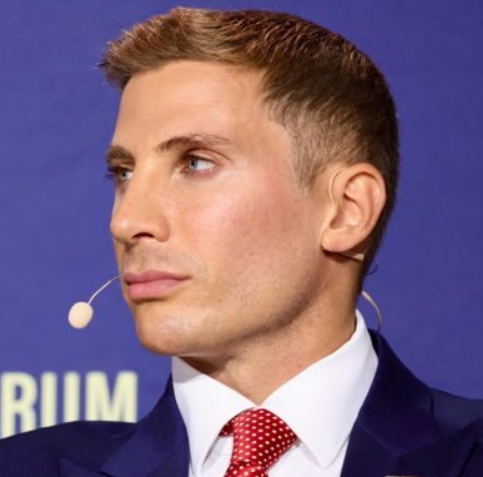
Testifying before a congressional committee, Under Secretary of State for Economic Affairs Jacob Helberg said the effort is less about traditional trade disputes and more about long-term national survival.
“I did not come here today to speak to you about tariffs. I did not come here to discuss the minutiae of trade deficits or the technical specifications of logic chips. I came here to speak to you about survival,” Helberg told lawmakers.
He described the current moment as a historic inflection point, arguing that the central issue facing the global economy is no longer whether artificial intelligence will reshape growth, but who controls the industrial foundations that make AI possible.
“The defining question is who will control the industrial foundations that make AI possible, and who will be forced to depend on those who do,” he said.
That concern underpins Pax Silica, which Helberg described as a coalition designed to rebuild supply chain security across infrastructure, industrial capacity, and critical technologies that now define national power.
“In the AI era, supply chains are leveraged,” he warned, adding that “dependency is vulnerability.” Pax Silica, he said, is intended to reduce strategic dependence, create reliable redundancy, and compete with coercive economic systems without replicating them.
Helberg pointed to economic growth figures to underscore the argument, saying average growth across G7 economies stands at about 1.5 percent, compared with roughly 4.7 percent among Pax Silica countries. He added that the U.S. economy is again leading growth at 4.3 percent, citing pro-growth policies, balanced trade, energy expansion, deregulation, and tax incentives.
Looking ahead, Helberg outlined two priorities for the next phase of the initiative: execution and alignment.
On execution, he said the United States and partner countries plan to issue joint requests for proposals to integrate logistics infrastructure, including ports, railways, and highways, with secure data flows and full supply-chain visibility. Rebuilding industrial capacity, he argued, is not about nostalgia but sovereignty. “In this century, it is sovereignty,” he said.
He also highlighted the American AI Exports Program, calling it the country’s signature AI diplomacy effort and a coordinated government initiative to share U.S. AI technologies with trusted partners.
On policy alignment, Helberg said Pax Silica would advance a pro-innovation, pro-adoption approach to artificial intelligence governance. “We believe in AI opportunity, not AI trepidation,” he said, adding that the United States would oppose extraterritorial censorship and overly burdensome regulation.
The coalition continues to expand. India formally joined the initiative last week, signing the Pax Silica Declaration in New Delhi alongside U.S. officials. Speaking at the signing, U.S. Ambassador Sergio Gor said, “India joins Pax Silica, the coalition that will define the 21st century economic and technological order.”
The alliance also includes countries such as Japan, South Korea, the United Kingdom, and Israel, and aims to strengthen critical minerals supply chains while deepening cooperation on artificial intelligence. (Source: IANS)