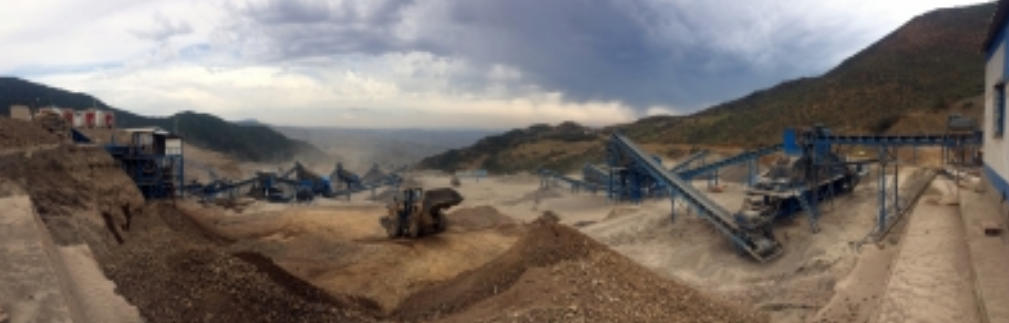

NEW DELHI, India — The United States is accelerating investments in infrastructure projects across Africa as it seeks to counter China’s dominance in critical minerals, including copper, cobalt, lithium, and rare earth elements.
The push comes amid intensifying global competition for resources essential to clean energy, electronics, and defense technologies, with both Washington and Beijing vying for greater control over supply chains.
China has built a deep and expansive presence in Africa’s mining sector, extending well beyond extraction into processing, transport, and export logistics. Major Chinese firms operate across key mineral-producing regions, creating tightly integrated systems that link African resources directly into Chinese-controlled value chains.
That level of vertical integration has increased economic and technical dependence for many African countries, as mineral production is often tied to Chinese infrastructure and processing capacity.
In response, the U.S. is focusing on infrastructure development to open alternative export routes and reduce reliance on Chinese networks. A central element of that strategy is the development of transportation corridors designed to connect mineral-rich regions to ports not controlled by Chinese-backed systems.
The Lobito Corridor is a flagship project under this approach. It aims to boost annual transport capacity to 4.6 million tonnes through railway rehabilitation and port upgrades. Officials expect the improvements to cut transit times by nearly a month and lower transportation costs by about 30 percent compared with existing routes.
The U.S. is also supporting port modernization and logistics improvements to increase efficiency and reduce bottlenecks, making African mineral exports more competitive globally.
Financing for these projects is being driven in part by U.S. development finance institutions, which are offering loan guarantees and direct funding to provide alternatives to Chinese-backed infrastructure deals. The U.S. International Development Finance Corporation has taken a leading role in backing projects aligned with Washington’s strategic goals.
At the same time, U.S. policy initiatives aimed at boosting domestic and allied mineral supply chains have elevated the issue to a national security priority.
China’s strongest advantage remains in downstream processing, where much of the value in the supply chain is created. Industry estimates show China accounts for about 80 percent of global cobalt refining, 40 percent of copper smelting, and roughly 60 percent of lithium processing.
Because raw minerals extracted in Africa often must be processed elsewhere to meet industrial standards—particularly for battery production—much of that value flows through Chinese facilities. Processing can account for 40 to 60 percent of the total value of a finished product, while extraction typically contributes only a small share.
Chinese investment in railways, ports, and logistics networks has further reinforced its position, creating long-term export routes that channel African minerals toward Chinese processing hubs.
U.S. officials hope that expanding infrastructure alternatives will help shift that balance, giving African producers more options and reducing Beijing’s grip on global mineral supply chains. (Source: IANS)