MUMBAI–Foreign airlines operating at Mumbai’s Chhatrapati Shivaji Maharaj International Airport have supported a proposal to transfer flights serving 14 international destinations to the new Navi Mumbai International Airport as the city’s aging Terminal 1 prepares for demolition and reconstruction, according to sources familiar with the discussions.
The proposed relocation is part of a broader plan to reduce passenger traffic at Chhatrapati Shivaji Maharaj International Airport (CSMIA) while Terminal 1 undergoes redevelopment.
Mumbai International Airport Ltd. Chief Airport Officer Vishnu Mohan Jha has informed India’s Civil Aviation Ministry that foreign carriers recommended the arrangement to Adani Airport Holdings Ltd. (AAHL), which operates CSMIA, according to the sources.
Indian carriers IndiGo, Air India Group and Akasa Air have already agreed to transfer affected services to Navi Mumbai International Airport (NMIA).
Beginning March 28, 2027, when the International Air Transport Association’s summer schedule takes effect, CSMIA plans to temporarily suspend flight slots for 14 international destinations.
The affected destinations include Bahrain, Dammam, Dhaka, Doha, Fujairah, Jakarta, Jeddah, Kathmandu, Kuwait City, Madinah, Muscat, Ras Al Khaimah, Riyadh and Sharjah.
Flights serving these destinations would instead operate from NMIA, consolidating services on individual routes at a single airport within the Mumbai Metropolitan Region.
The consolidation is intended to reduce passenger confusion and inconvenience by preventing airlines serving the same international destination from operating out of different Mumbai-area airports.
According to airport officials, approximately 91% of CSMIA’s existing passenger traffic would remain unaffected by the transition.
Mumbai International Airport Ltd. must relocate approximately 5 million passengers annually to accommodate the redevelopment project. Indian carriers account for an estimated 3 million of those passengers.
Several airlines have already outlined plans to expand or transfer operations to Navi Mumbai.
IndiGo announced last month that it would gradually shift 12 daily international departures to NMIA between February and July 2027, expanding its international network at the new airport to 12 destinations.
Air India Group has also announced plans to increase operations at NMIA through its subsidiary Air India Express.
The airline is scheduled to introduce four daily domestic flights from the new airport in December, followed by planned international services to Kuwait, subject to regulatory approval, and existing Oman operations beginning in January 2027.
Flights to Jeddah, Riyadh, Dammam, Doha, Muscat and Sharjah are expected to move to NMIA by the summer of 2027.
Akasa Air has announced that its Mumbai-Jeddah service will operate from Navi Mumbai beginning in December.
The relocation is necessary because of growing safety and structural concerns surrounding CSMIA’s Terminal 1, which was commissioned in 1964.
Independent assessments conducted by Structwel and the Indian Institute of Technology Bombay identified structural vulnerabilities at the aging facility, prompting airport authorities to prioritize its replacement.
CSMIA currently handles approximately 55 million passengers annually. The temporary transfer of 5 million passengers would allow the airport to continue accommodating most of its existing traffic during construction.
Once redevelopment of Terminals 1 and 2 is completed, the airport’s annual passenger-handling capacity is expected to increase to 65 million, according to a senior official.
Authorities plan to implement the flight transfers gradually to minimize disruptions to airline operations and passenger travel.
Demolition of Terminal 1 is scheduled to begin in April 2027, with completion of the replacement terminal targeted for December 2030.
Mumbai International Airport Ltd. has clarified that the demolition and temporary reduction in passenger traffic were already incorporated into the airport’s approved tariff structure following consultations with industry stakeholders.
To encourage airlines to establish international services at Navi Mumbai, airport authorities have introduced financial incentives under a revised variable tariff plan approved in September.
Under the arrangement, airlines launching new international routes from NMIA will pay no landing fees during their first year of operations and receive a 50% discount on standard landing charges in their second year.
Long-haul international services covering distances exceeding 5,000 kilometers will qualify for additional discounts during their third year.
NMIA is also offering cash vouchers to international passengers to help offset differences in user development fees between the two airports.
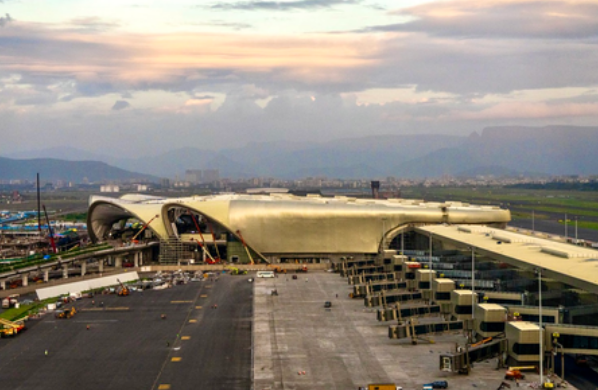
The new airport has an initial annual passenger-handling capacity of 20 million.
Its international passenger facilities include 55 check-in counters, 24 electronic gates, 26 emigration counters and 32 immigration counters.
The planned transition represents a significant restructuring of international air travel in the Mumbai region as authorities seek to modernize existing airport infrastructure while expanding operations at Navi Mumbai. (Source: IANS)