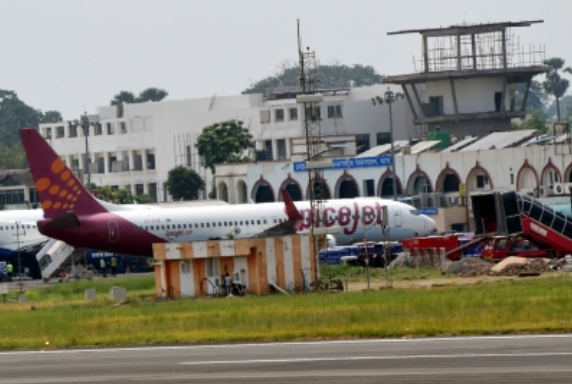
NEW DELHI– Financially troubled Indian airline SpiceJet saw its share of the domestic aviation market decline to 0.6% in September, falling below regional carrier Star Air for the first time as financial difficulties and operational disruptions continued to affect its business.
According to data released by India’s Directorate General of Civil Aviation (DGCA), Star Air secured a 0.7% share of the domestic passenger market in September, overtaking SpiceJet, which has struggled with grounded aircraft, flight cancellations and financial pressures.
SpiceJet’s market share has declined steadily throughout 2026, falling from 3.9% in January and February to 1.2% in August before dropping to 0.6% in September.
The decline reflects the challenges facing the budget airline as operational constraints limit its ability to compete in India’s domestic aviation market.
In contrast, Star Air has maintained a relatively stable presence in the regional aviation segment. Its market share stood at 0.6% in January and fluctuated between 0.5% and 0.6% in subsequent months before increasing to 0.7% in June.
The regional airline maintained that share through July, August and September, allowing it to move ahead of SpiceJet in the domestic market rankings.
The shift came amid an overall slowdown in India’s domestic aviation industry.
Indian airlines carried approximately 11.82 million domestic passengers in September, representing a 6.49% decline from the same month a year earlier, according to DGCA figures.
Higher airfares, rising aviation fuel costs and depreciation of the Indian rupee contributed to pressure on passenger demand during the period.
For the first nine months of 2026, domestic airlines transported 122.35 million passengers, down 0.82% from 123.37 million during the corresponding period in 2025.
SpiceJet’s difficulties have been compounded by recurring operational disruptions, including flight cancellations that have affected passengers in recent months.
Financial constraints have also contributed to aircraft remaining out of service, limiting the airline’s operational capacity and weakening its competitive position.
The airline has faced regulatory scrutiny over its consumer practices as well.
In July, the Central Consumer Protection Authority (CCPA) imposed a penalty of Rs 1 lakh on SpiceJet Limited for using deceptive online design practices, commonly known as “dark patterns,” on its flight booking platform.
The regulator found that the airline automatically enrolled customers in its loyalty program and used pre-selected options to obtain consent for promotional communications.
Such practices can influence consumer choices by encouraging customers to accept services or permissions they may not have intentionally selected.
SpiceJet’s shrinking market share highlights the difficulties facing the airline as it attempts to stabilize operations amid financial and competitive pressures.
Meanwhile, Star Air’s ability to maintain its market share has allowed the smaller regional carrier to move ahead of SpiceJet, marking a notable change in India’s domestic aviation rankings. (Source: IANS)