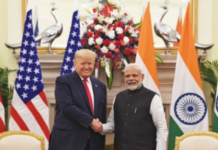

NEW DELHI, India — When U.S. President Donald Trump imposed a 25 percent “reciprocal tariff” on India, followed by another 25 percent penalty targeting New Delhi’s purchase of Russian oil, many expected India to buckle under pressure. Instead, India stayed firm, maintaining dialogue while signaling clearly that it would defend its economic autonomy.
That approach now appears to be yielding results. India and the United States are close to finalizing the first phase of a bilateral trade agreement (BTA) aimed at easing tariff disputes and expanding market access. Officials say the opening tranche of the agreement is “nearing closure,” with talks now in an advanced stage.
The first phase focuses primarily on the 50 percent tariffs the U.S. imposed on Indian goods. Commerce Minister Piyush Goyal reiterated that any agreement must remain fair, equitable, and balanced, especially for vulnerable domestic sectors like farmers and fishermen. Negotiations are broadly divided into two parts: one centered on tariff reciprocity and another addressing wider issues such as market access and regulatory alignment. The tariff portion is likely to conclude sooner, while the structural issues may take longer to iron out.
A tariff reduction could make Indian exports more competitive in the U.S. market. Key industries such as pharmaceuticals, textiles, and engineering goods — which are on track to surpass $50 billion in U.S.-bound exports in 2025 — stand to gain significantly. A successful agreement would reduce trade barriers, strengthen export avenues, and deepen India’s strategic partnership with Washington.
The shift in momentum comes after months of deliberate and resilient diplomacy. India’s strategy reframed trade discussions as part of the broader Indo-U.S. strategic relationship rather than a narrow transactional engagement. Defense cooperation, technology collaboration, and energy partnerships were brought into the conversation, helping stabilize the tone of negotiations and manage domestic expectations.
Despite concerns in Washington over India’s continued import of Russian oil, New Delhi maintained its energy priorities without allowing the issue to derail talks. This firm yet pragmatic stance helped preserve negotiation progress. Six rounds of discussions have already been completed, reflecting India’s determination to keep the dialogue moving despite external pressure.
Signals from both capitals now suggest strong political will to finalize the first tranche by late 2025, possibly even this month. India’s leadership has consistently presented the BTA as an issue of national interest, ensuring broad domestic support and minimizing resistance across sectors.
India’s ability to negotiate with resolve and maturity enhances its global standing in trade diplomacy and positions it as a key player in the reconfiguration of global supply chains. As SBI Capital Markets noted in its report titled “Tariffs Are Made in the USA, but Resilience Is Made in India,” Washington’s tariff push became a major flashpoint — but India’s response ultimately paved the way for a balanced and forward-looking agreement.
With the trade deal expected to embed economic cooperation within a larger strategic framework, Indo-U.S. ties appear poised to strengthen well beyond the immediate tariff dispute. (Source: IANS)