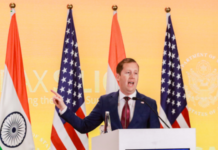

NEW DELHI, Feb. 17 — Indian exporters are positioned for stronger global market access following a sharp reduction in U.S. tariffs and the near completion of key trade agreements, Department of Financial Services Secretary M. Nagaraju said Tuesday.
Speaking on the sidelines of the 10th edition of Exim Bazar, Nagaraju said the cut in U.S. tariffs from 50 percent to 18 percent, combined with trade deals nearing completion with the United States and the European Union, has significantly improved prospects for Indian exports, particularly in handicrafts.
“Indian businesses now have stronger global opportunities,” Nagaraju said.
“With trade deals with the U.S. and the EU almost finalized and the rollback of steep tariffs by America, exporters can expect improved access to international markets,” he added.
Nagaraju highlighted the role of Exim Bank in supporting micro, small, and medium enterprises, especially artisans engaged in handicrafts and handlooms. He credited the institution’s long-running initiatives with helping improve product quality and expand market reach.
“Many artisans have reported better sales and improved product quality due to institutional backing and exposure to global buyers,” he said.
He explained that Exim Bank operates on two fronts, providing government-to-government lines of credit on behalf of the Indian government while also running commercial operations that support exporters by raising funds in overseas markets and extending financial assistance.
Nagaraju also pointed to the government’s recently launched export mission and a new guarantee support framework introduced by the Department of Financial Services to help exporters navigate global trade volatility. He said the guarantee scheme has been effective in protecting exporters from adverse international developments.
On the role of artificial intelligence in trade, Nagaraju said technology can improve connectivity and access to information but cautioned that it cannot replace product quality, particularly in traditional sectors.
He emphasized that India’s handicraft and handloom products are closely tied to the country’s cultural heritage and must remain competitive on quality and pricing.
“While AI can support marketing and outreach, the final decision of buyers will depend on the strength of the product itself,” he added.
If you want, I can also tighten this further for a pure business-journal style or adapt it for a regional U.S. business publication. (Source: IANS)