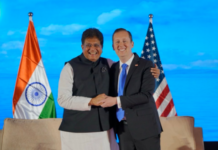

WASHINGTON — India is emerging as a central pillar of the White House’s global artificial intelligence strategy and stands out as a “technology powerhouse,” according to President Donald Trump’s top science adviser, who cited the country’s engineering strength and rapidly expanding innovation ecosystem.
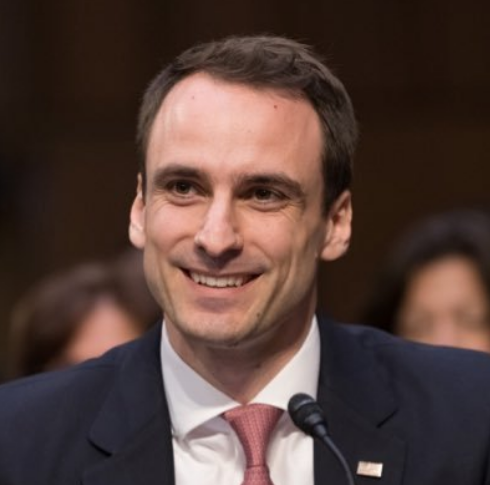
Michael Kratsios, assistant to the president and director of the White House Office of Science and Technology Policy, made the remarks in a recent television interview following his visit to India for the India AI Impact Summit.
“India is a technology powerhouse,” Kratsios said, pointing to the country’s large pipeline of engineering graduates, deep domestic talent base, and growing capacity to build products and applications at scale.
He placed India within a broader U.S. effort to promote what the administration describes as “real AI sovereignty” among partner nations, as global disparities in artificial intelligence adoption continue to widen.
“The divergence in AI adoption between developed and developing countries is growing every day,” Kratsios said, adding that countries face a critical inflection point if they fail to integrate AI into sectors that deliver tangible benefits, including healthcare, education, energy infrastructure, agriculture, and citizen-facing government services.
The administration is advancing that agenda through the American AI Exports Program, which Kratsios described as an alternative to what he called a long-standing false choice faced by developing countries seeking technology support.
“We believe the American AI Exports Program offers a different path,” he said, citing access to trusted technology, financing to overcome adoption barriers, and deployment support.
Kratsios defined “real AI sovereignty” as the ability to own and deploy best-in-class technology for national benefit while shaping a country’s future amid global technological shifts. He stressed that the strategy is not aimed at isolating or controlling partners, nor is it directed at any single competitor.
“This is about the fact that the United States has the best AI technology in the world, and many countries want it in their ecosystems,” he said.
Looking ahead, Kratsios said the next phase of AI innovation will increasingly revolve around autonomous agents and the standards governing how they communicate and coordinate. He noted that U.S. standards bodies have begun work on frameworks to ensure such systems can interoperate securely and effectively.
Cost remains a major hurdle for many emerging economies, he said, pointing to the expense of building the AI stack, including data centers, semiconductors, and power generation. To address that, Washington is mobilizing financing and support through agencies such as the U.S. International Development Finance Corporation and the Export-Import Bank.
Kratsios also announced the creation of a U.S. Tech Corps, modeled in concept on the Peace Corps but focused on deploying technical expertise. The initiative aims to recruit professionals with strong technology backgrounds to help implement AI solutions in partner countries.
He emphasized that India has long been a trusted partner in U.S. technology-sharing efforts and noted that American hyperscale technology companies already operate data centers and research facilities in the country, deepening India’s integration into the U.S.-led AI ecosystem. (Source: IANS)