SEOUL– A U.S. immigration raid that led to the detention of hundreds of South Korean workers in Georgia has sparked outrage in Seoul, with industry experts warning it could cast a long shadow over economic ties and future investments.
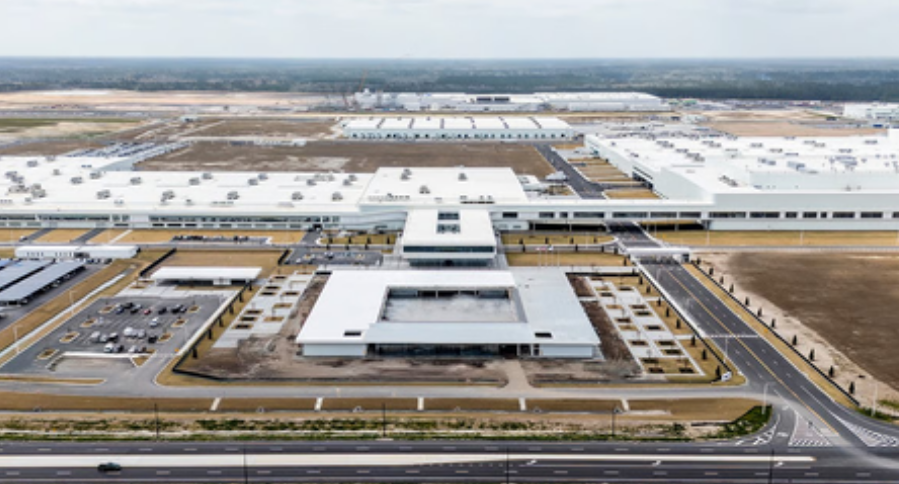
Last week, U.S. officials detained about 475 workers—including roughly 300 South Koreans—at a construction site for a Hyundai Motor Group–LG Energy Solution electric vehicle (EV) battery plant, citing violations of employment law. The detained South Korean nationals are expected to return home Friday on a chartered Korean Air flight from Atlanta, according to Yonhap News Agency.
The raid, seen as rare if not unprecedented against workers from a close U.S. ally, came just 10 days after a summit between South Korean President Lee Jae Myung and U.S. President Donald Trump. The timing has rattled South Korean companies, many of which have already committed billions of dollars to U.S. manufacturing and supply chains.
“This was not just about detaining some 300 people—it was an insult,” said Kim Pil-soo, an automotive engineering professor at Daelim University. “Inevitably, U.S. investment will have to be reconsidered or delayed unless safeguards are put in place.”
Kwon Yong-joo, a professor at Kookmin University, echoed those concerns, saying the raid could force Hyundai Motor and other Korean firms to rethink their U.S. strategies. “The raid at the Hyundai-LG site will likely have a major impact on the Korean auto industry, forcing Hyundai to reorganize its EV strategy, which is heavily U.S.-focused,” he said. He warned that any delays at the $4.3 billion battery plant could disrupt output at Hyundai Motor Group Metaplant America, which began operations in Georgia last October.
South Korea’s corporate sector has long relied on Korean workers and subcontractors for construction and engineering, but the raid has spotlighted confusion over visa rules. Some of those detained reportedly held B-1 business visas, which, under U.S. law, allow foreign employees to install machinery or train local staff but not work directly on production lines or construction projects.
Industry groups are now urging the South Korean government to secure assurances from Washington that B-1 visa holders will not face enforcement action when performing permitted duties. “The fact that B-1 holders were included in this raid has created enormous confusion for companies,” one industry source said.
Despite the uproar, experts believe most South Korean firms will maintain their U.S. investments, noting the Trump administration’s high tariffs on imports leave few alternatives. “If Korean companies do not produce locally in the U.S., they cannot sell their products there. Abiding by local laws is an unavoidable condition,” said Kim Tae-nyen, president of Mirae Mobility Research and Services.
South Korea has pledged about $350 billion in U.S. investments under a July trade agreement, including participation in the “Make American Shipbuilding Great Again” initiative. But observers warn the Georgia raid could strain investor confidence and slow the pace of expansion, even as economic interdependence keeps the partnership intact. (Source: IANS)