
NEW DELHI, India — The first tranche of the proposed India–U.S. trade deal is close to being finalized and could lead to a reduction in steep U.S. tariffs on Indian exports, Commerce Secretary Rajesh Agrawal said Thursday, though he declined to commit to a specific timeline.
Agrawal said India’s Commerce Minister Piyush Goyal held a virtual meeting with U.S. Trade Representative Jamieson Greer in the last week of December, and negotiating teams on both sides remain in continuous discussions to reach a consensus.
The United States has imposed a 50 percent tariff on most Indian goods, one of the highest tariff levels applied to any major trading partner. Agrawal said India is hopeful that exports to the U.S. will continue to grow despite the higher duties.
He noted that electronics exports, which are currently tariff-free, have been a key driver of shipments to the U.S., even as elevated tariffs continue to affect other sectors. Agrawal added that both countries remain engaged and committed to securing a deal.
Separately, newly appointed U.S. Ambassador to India Sergio Gor said earlier this week that trade talks between the two countries are actively ongoing.
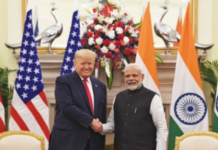
Gor said President Trump conveyed “his best wishes to his friend Prime Minister Narendra Modi.”
“The friendship between Mr. Trump and Mr. Modi is real and the U.S. and India are bound not just by shared interests, but by a relationship anchored at the highest levels. Real friends can disagree, but always resolve their differences in the end,” Gor said.
He added that while trade remains an important pillar of India–U.S. relations, the two countries will continue to cooperate closely in areas including security, counter-terrorism, energy, technology, education, and health.
Gor also announced that India will be invited to join PaxSilica as a full member next month. He described PaxSilica as a newly launched U.S. initiative aimed at building a secure and innovation-driven silicon supply chain, spanning critical minerals, energy inputs, advanced manufacturing, semiconductors, artificial intelligence development, and logistics.
“Nations that joined last month include Japan, South Korea, the United Kingdom, and Israel. India’s inclusion would further strengthen the group,” he said. (Source: IANS)