WASHINGTON, D.C. — Former U.S. Deputy Secretary of State Kurt Campbell described India as America’s most important strategic partner of the 21st century, while acknowledging growing concerns about recent tensions in the relationship.
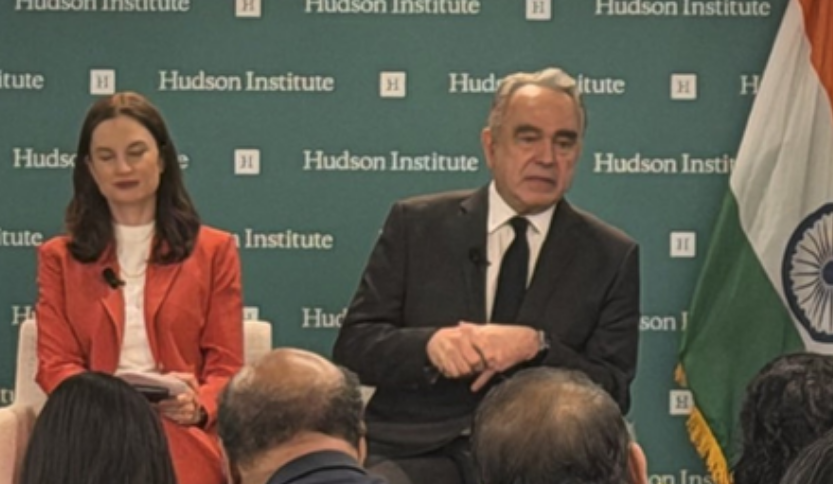
“I believe the most important relationship for the United States in the 21st century is between the United States and India,” Campbell said at the New India Conference hosted by the Hudson Institute.
He cautioned, however, that recent developments have raised concerns, saying it was “troubling… that we have to have a reminder around mutual respect.”
Campbell highlighted the strength of people-to-people ties, pointing to the role of the Indian diaspora during the COVID-19 pandemic, when Indian-American communities mobilized quickly to send medical supplies to India.
“I have never seen… the most massive rapid accumulation of humanitarian medical products… shipped… on a moment’s notice,” he said.
He identified education and technology as key pillars of the future relationship, citing strong demand from Indian students in U.S.-led initiatives.
“India, 6,000 candidates for 25,” Campbell said, describing the numbers as a sign of the country’s ambition and potential.
Campbell called for expanding academic and technological collaboration, warning that recent cuts to such programs were “tragically and inexplicably” undermining progress.
On strategic alignment, he pointed to bureaucratic challenges within the U.S. system that complicate engagement with India, particularly in defense coordination across multiple regions. He said India should be more fully integrated into the Indo-Pacific framework.
Campbell also warned that ongoing global conflicts could weaken U.S. deterrence in the Indo-Pacific, as military resources are diverted elsewhere.
“The quality of our deterrents… is going to go down in the Indo-Pacific,” he said.
He added that the broader economic consequences of global instability would be significant, affecting supply chains, energy markets, and manufacturing.
“This is not just a regional conflict… it is a global one,” Campbell said.
Despite the challenges, he said the long-term fundamentals of the partnership remain strong and called for sustained political and institutional support, including deeper engagement with the Indian-American community.
The New India Conference brought together policymakers and analysts to examine India’s global role and the evolving trajectory of U.S.-India relations.
Over the past two decades, ties between the two countries have expanded across defense, trade, and technology, with growing coordination in the Indo-Pacific, even as recent disruptions have slowed momentum. (Source: IANS)