
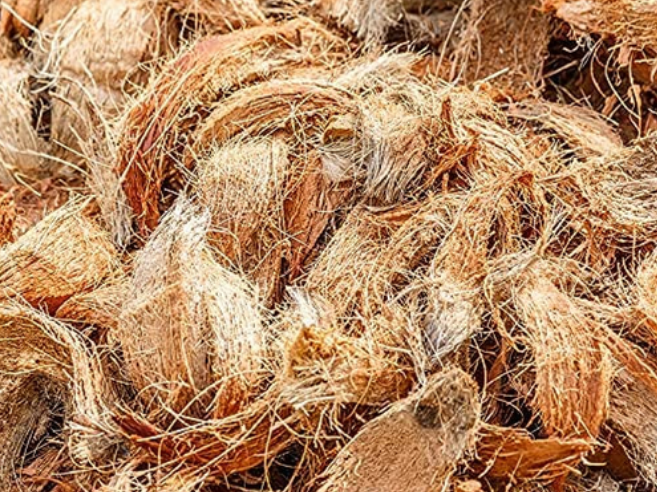

New Delhi — India, the world’s largest producer of coir, is using the natural fiber to support rural livelihoods, women’s employment and small businesses across coconut-growing regions, according to a factsheet from the Ministry of Micro, Small and Medium Enterprises.
India accounts for more than 80 percent of global coir fiber production, while women make up nearly 80 percent of workers involved in fiber extraction and spinning.
The industry connects coconut farmers, workers, women artisans, cooperatives, entrepreneurs, manufacturers and exporters, making it an important source of rural employment.
Coir, which is made from coconut husks, is increasingly being used for higher-value products such as mats, ropes, brushes, household goods, decorative items, handicrafts and eco-friendly packaging.
The Central Coir Research Institute has also developed coir-based rail wheel axle packaging cups as an alternative to HDPE plastic cups, highlighting the potential for traditional natural fibers to be used in modern industries.
The MSME Ministry, through the Coir Board and the Prime Minister’s Employment Generation Programme, has supported entrepreneurs seeking to build businesses around coir products.
In Kadiyam in Andhra Pradesh’s East Godavari district, Allam Gowthamy turned coconut fiber and coir waste into a business after receiving specialized training at the Coir Board Training Centre in Dhawaleswaram.
She established Adigo Coir Products in 2024-25 with a project cost of Rs 10 lakh, backed by a Rs 6.50 lakh bank loan and PMEGP assistance. The company produces eco-friendly doormats, ropes, decorative dolls and handicrafts.
According to the factsheet, the business has annual turnover of about Rs 35 lakh and profit of roughly Rs 10 lakh while directly employing six women.
Gowthamy has also trained nearly 120 women in coir mat weaving, rope making and handicraft production. Her success has helped inspire about five additional coir units in nearby areas with PMEGP support.
In Kerala, P. Surendran established Sampoorna Plus Agro Fertiliser Enterprises in Kozhikode in November 2024, turning coir pith into an agricultural product.
With training and technical support from the Coir Board in Kannur and the Central Coir Research Institute in Kalavoor, the company began producing coir pith bio-fertilizer designed to improve soil fertility and moisture retention.
Within a year, the business built a customer base of more than 500, sold over 20 tons of bio-fertilizer and recorded turnover of Rs 13 lakh, with profit of Rs 4 lakh in fiscal 2024-25.
The enterprise also employs five workers, including two women, demonstrating how coir waste can be turned into new business and employment opportunities. (Source: IANS)